Friday, October 18, 2024

Art as a Tool for Economic Growth and Social Change


Art as a Tool for Economic Growth and Social Change
 
 Preamble
I begin by commending the patriotism and joint initiative of the Federal Ministry of Budget and Economic Planning and the Nigeria Economic Summit Group (NESG), the conveners of this conference, particularly during this challenging period in our country’s development. It is a commendable example of the much-vaunted Public-Private Sector Collaboration, which development experts advocate for building a vibrant, sustainable economy.

It is pertinent to mention that this is the perfect time for all stakeholders in our nation to discuss the way forward for our fledgling economy. The theme of the summit captures its essence: “Collaborative Action for Growth, Competitiveness, and Stability.”
I would also like to take this opportunity to formally appreciate the Africa Art Fund for the honor of adding my voice to what is perhaps one of the most significant issues of our time—how to grow Nigeria’s economy and social environment for the benefit of the citizenry.

Before delving into my thoughts on this important topic, I would like to define the main terms from an artist’s perspective. I hope my view will not differ too much from those of my fellow panelists and participants at this forum.

a. Economic growth is the increase in the value of all goods and services produced in a given year. Economic growth is typically discussed alongside economic development, as the former tends to lead to the latter. Economic development, however, concerns the standard of living and the general well-being of people in a defined geographical area, such as Nigeria.

b. Social change refers to the alteration or modification of human behavior and relationships, which results in institutionalized improvements in the standard of living in society.

Surely, these two objectives deserve the attention of all well-meaning citizens of this country at this critical juncture in its politico-economic history, not just artists like me.

Art’s Place in the Economy
Globally, art is a potent force in social and economic development. It serves not only as a means of expression and communication but also provides livelihood for the artist and is a tool for economic growth. This fact becomes even more evident when fine and visual art is seen as an integral part of the broader discipline commonly referred to as the Arts. When we speak of the Arts, we refer to the three interrelated genres: literary arts, performing arts, and fine and visual arts, in which I have, with humility, built a career, an industry niche, and a reputation over the past six decades.

The Link Between Art, Culture, and the Economy
Art is inextricably linked to culture, and since culture stems from tradition, worldviews, and the values of a people, it naturally impacts the economy. Art is a divine gift to humanity; it gives meaning to our lives and helps us creatively explore and communicate our deepest emotions using resources from our surroundings.

The official correspondence to me, and presumably to my fellow panelists, rightly declares that art “is more than just a mirror to society; art can actively shape it by sparking conversations that drive action and influence policy reform.” This summit is undoubtedly sparking the necessary conversations. I hope that for Nigeria’s sake, these conversations will indeed drive collective action and influence policy reform.

My colleagues and I on this panel expect that the Ministries of Arts and Culture—at both the federal and state levels—will take the recommendations from this summit seriously and act promptly to implement them. This is the only way to ensure that art truly starts to drive social change and economic growth going forward.

Underestimation of Art’s Contribution to GDP
It is difficult to obtain reliable and usable data on fine and visual art in Nigeria. Even the available statistics greatly underestimate the contribution of art to GDP, partly because those compiling the data may not fully appreciate the all-encompassing nature and ubiquity of art in nearly all spheres of life.

For instance, the National Bureau of Statistics reports that last year the film and music subsector of the creative industry contributed only US $1.4 billion to the GDP, accounting for 82% of revenues in the sector. This suggests that fine and visual art accounts for a paltry 18%. This, however, is incorrect, as these statistics do not account for contributions by fine artists in architecture, industrial design, fashion, advertising, and other industries.
Furthermore, the impact of art in cultural events, festivals, and carnivals is not captured. For example, what would festivals like the Osun Oshogbo festival or the Calabar Carnival be without the contributions of fine and visual artists? As an experienced professional artist, teacher, and art entrepreneur, I confidently assert that art contributes up to half of all revenues generated in the creative sector.

A Bright Future Ahead
The Minister for Art, Culture, and Creative Economy, Hannatu Musawa, is optimistic about the future of the creative sector. She projected that, at the current rate of enlightenment, Nigeria could generate as much as US $100 billion annually from the creative sector by 2030. Though this amount is considered overly optimistic by some, it presents a significant challenge to all stakeholders in the creative industry, starting with the government.

Way Forward: Integrating Art into Economic Development – Recommendations

1. Change the Narrative of Art
Through balanced education and better information dissemination, we must change the stereotypical view of art as an unproductive pursuit. Instead, it should be promoted as a tool for personal development and economic growth, opening doors for talent and showcasing art as a viable industry.


2. Establish Endowments for Art and Artists
We must encourage the creation of endowments for art, led by the government and supported by corporate bodies. Endowments will nurture artists, unleash creativity, and inspire breakthroughs across all spheres of productive endeavor.


3. Leverage Art’s Impact on Health and Well-being
Society must recognize art’s role in maintaining mental and physical well-being. Health, in turn, boosts productivity, which positively impacts the economy.


4. Promote Local Tourism Driven by Art and Culture
Government policy should upgrade infrastructure, leading to a boom in internal tourism, especially during holiday seasons. Nigeria’s art assets can encourage locals to explore the country, benefiting the transportation and hospitality industries.


5. Restore Lost Values and Cultural Identity Through Art
Investing in art can help capture and preserve the essence of Nigeria’s cultural narratives for future generations.


6. Invest in More Art Institutions
Supporting informal art institutions, like the Harmattan Workshops run by the Bruce Onobrakpeya Foundation, will develop grassroots talents and foster self-employment opportunities in the creative industry.


7. Encourage Collaboration Among Stakeholders
Collaboration among ministries, the business community, and art institutions is crucial to realizing the economic potential of the arts.


8. Nurture Culture-based Industries
Sustained support for culture-based industries, such as artisanal furniture making, will strengthen local economies and drive innovation.


9. Art as an Image Builder
Art can enhance the image of cities, making them more attractive to residents and businesses, as seen in Lagos under Governor Akin Ambode.


10. Boost Nigeria’s International Image through Art
Nigeria should establish cultural institutions abroad, similar to Germany’s Goethe Institut or France’s Alliance Francaise, to project its art and culture on the world stage.


11. Exploiting Art in the Age of AI
As AI takes over repetitive jobs, artists can rely on their innate creativity and unique talents, which AI cannot replicate. Society should encourage more people to pursue careers in art as a safeguard against job losses due to automation.


In conclusion, art is a powerful tool for economic growth and social change. With the right investments and collaborations, Nigeria can unlock the vast potential of its creative sector and achieve significant socio-economic gains.
 
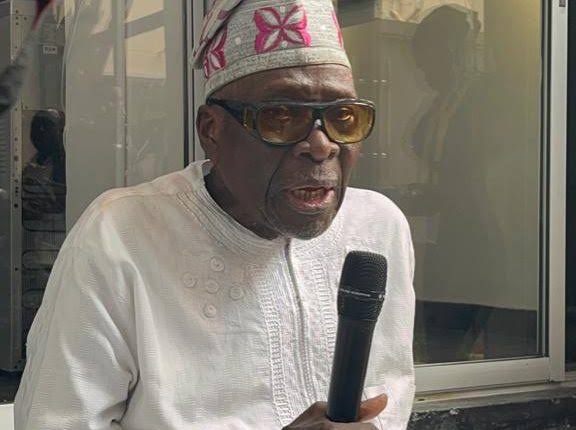
Bruce Onobrakpeya 
15th October 2024


Saturday, July 6, 2024

Legacy of Light: Honouring Zinno Akpoghene Orara

Artist Zinno Orara Passes ON @ Age 58

Born in Benin City in 1965, Zinno Akpoghene Orara embarked on a creative journey that resonated far beyond his beginnings. Educated at Government College, Ughelli, and later at the Auchi Polytechnic School of Art and Design, he honed his craft with a focus on painting and illustration, graduating at the top of his class at the age of 23 in 1988.

Orara's artistic prowess quickly found recognition, marked by his inaugural exhibition at Lagos State's Didi Museum in 1991. From this milestone, he embarked on a global journey, captivating audiences with numerous exhibitions hosted in galleries and museums worldwide, culminating in his recent joint exhibition with classmate and friend Gab Awusa  titled 'Refreshing Dialogue' held in Lagos just last month. A show curated by Moses Ohiomokhare

Regarded as one of his generation's most influential artists, Orara transcended mere creativity to become a beacon of guidance and inspiration for countless young artists worldwide. His legacy as a teacher, leader, and visionary continues to illuminate the path for future generations of artists, ensuring that his impact endures far beyond his canvas.
 
Mudiare Onobrakpeya
writes from Lagos
6th july 2024


Simidele Adesanya : A Magnificent Obsession from Law Practice to Art and Gallery Curating

Simidele Adesanya, a second-generation Lagosian, embarked on an unconventional journey in the art world. Despite her educated background as a lawyer, she followed her passion for art, becoming a prominent arts promoter in Lagos. Her talent for networking and hosting intimate art gatherings in her home helped her build connections and attract art enthusiasts.


In 1992, she officially registered her gallery, facing financial challenges but maintaining unwavering commitment. Simidele's gallery stood out for its mission to elevate artists and the art profession, treating artworks as valuable assets. Her dedication bridged the gap between the artistic community and the wider public, leaving a significant mark on Lagos' art scene and the profession itself. In those early years her currency of trade was high ethical behaviour and conduct, with transparency and integrity as cannons. This professional behaviour brought a lot of respect not only to artists by the society at large, and gave a sense to many artists that one could survive from the toil of creating good works of art.


In the 2nd decade she collaborated and partnered with many persons and institutions, like Bisi Silva, where training seminars and education series across the country where developed. Also were auctions with Terra Kulture. Other shows like watercolour and pastel Exhibitions were developed and perfected. These were exploratory years that were ruled by a lot of passion and better business planning than the proceeding decade.


In the third decade of Sinmidele Adesanya's gallery journey, a period of consolidation took shape. With a stable source of income firmly established, Sinmidele began to channel resources into projects that aligned with her gallery's artistic interests and ambitions.


One notable outing was the gallery's participation in Art Dubai in 2016. Art Dubai provided a global stage where artists and their works could be showcased, reaching a diverse and international audience. Another significant milestone was the Masters show, a prestigious event that attracted distinguished dignitaries, including the former Vice President of Nigeria. These 2 events underscored the growing influence and impact of Simidele's gallery on the national and international art scene. While the cash flow generated at such international events might not have been the most favourable, the exposure and publicity and lessons gained were immeasurable


Looking ahead, Sinmidele believed that the art industry could progress by fostering greater cooperation and reducing personal agendas. Collaboration among artists, galleries, and institutions could lead to more meaningful and impactful artistic endeavours. She envisioned a future where well-thought-out ideas could be supported through sponsorship, allowing for the creation of even more remarkable events and exhibitions.


Sinmidele's "My Drim Gallery" proudly stood as a testament to her dedication and perseverance. Over three decades, the gallery had hosted over 200 exhibitions and provided crucial support to over 300 artists. It had become a hub of artistic innovation, a platform for artistic expression, and a driving force in propelling the Lagos art scene onto the global stage.


Simidele Adesanya's journey was a testament to the transformative power of passion, determination, and a commitment to promoting the arts. Her gallery had not only contributed significantly to the cultural landscape of Lagos but had also set a shining example for the entire art industry, showing what could be achieved through cooperation, vision, and unwavering dedication to the world of art.

https://lh3.googleusercontent.com/a/ACg8ocICHiy-bM9-FPYzInCl-jq0JxCCjS-_iK21Dx_cm0cFQMs=s40-p


Tribute to Fasuyi

CHIEF Timothy Adebanjo Fasuyi, a founding father of the Society of Nigerian Artists (SNA), was a visionary. His role in nurturing the SNA was pivotal, fostering a community where artists could collaborate and flourish. His leadership was not just administrative; it was inspirational, empowering artists to explore and express, shaping a vibrant artistic culture in Nigeria.

During the Nigerian Civil War, Fasuyi’s role was profound. He was among the select artists whose works toured globally, not merely as exhibitions but as emissaries of Nigerian creativity and resilience. These exhibitions served as powerful counter-narratives to the prevailing stories of conflict, showcasing our rich cultural heritage and artistic prowess.

As an art adviser to the Nigerian Government, Fasuyi wielded his expertise to shape national art policies and programmes, championing art education and cultural development. His tenure marked a significant elevation of art in our national consciousness.

Images (27)

Late Pa Timothy Adebanjo Fasuyi

Fasuyi’s artistic brilliance was most vivid in his mixed media works. He captured the essence of Nigerian life with a blend of surrealism and symbolism, integrating various mediums and styles seamlessly. His works were not just visually arresting; they were narratively compelling, deeply connected to our culture and traditions.

Chief Fasuyi’s legacy continues to illuminate the art world. His unwavering commitment to nurturing emerging talents and elevating Nigerian art, both locally and globally has left a profound impact. Through initiatives like the Fasuyi Prize at Ahmadu Bello University and the establishment of The Tim and Carol Art Gallery by his son, his lifelong dedication to art endures, serving as an enduring symbol of his passion and influence in the artistic community.

Through his works, leadership in the SNA, international exhibitions, and advisory roles, Fasuyi’s influence remains a cornerstone in the narrative of Nigerian art. He inspired a future where creativity, community, and cultural pride are celebrated, leaving a legacy that continues to inspire and guide future generations.

In tribute to Chief Timothy Adebanjo Fasuyi, I salute a life richly lived in the service of art, education, and culture. His journey was a testament to the transformative power of art in shaping society and legacy. His spirit lives on in every brushstroke, in every young artist he inspired, and in every corner of the Nigerian art world he helped shape.

* Onobrakpeya, a Nigeria National Order of Merit (NNOM), and UNESCO Human Living Treasure, wrote in this glowing tribute for the recently deceased Fasuyi from Lagos


Tribute to Tam Fiofori: Keen Chronicler of Nigerian Culture

Tam FioforI

Tam Fiofori, was a visionary filmmaker, photographer, and writer, whose indelible mark enriched Nigeria's artistic realm profoundly.

Tam Fiofori's creative brilliance shone brightly across our cultural landscape, yet our society's nurturing of his genius fell short. In comparison to his equally talented peers in more supportive settings, Tam's full potential may not have been fully realized.

To honour his legacy and support future luminaries, our society must establish genius grants and specialized funds. These initiatives empower gifted individuals to create impactful contributions, fostering a nurturing environment where their creativity can flourish. Such support not only enhances their productivity but also enriches our collective cultural fabric.


Nigeria remains a reservoir of exceptional talents like Tam, yet many struggle to realize their full potential due to inadequate support structures. Despite their occasional reclusiveness or rebellious nature, these geniuses deserve our steadfast protection.

Remembering kindred spirits like Ayodele Awojobi, Ola Balogun, Tijanni Mayakiri, Jimi Solanke and Oyiza Adaba underscores the importance of organizations like CORA, dedicated to celebrating our true talents.

Tam's absence leaves a void among close friends and fellow participants at the Harmattan workshop, organized by the Bruce Onobrakpeya Foundation, where his presence was deeply felt and cherished. His legacy as a confidant, friend, and artistic luminary who was a keen Chronicler of Nigerian culture, will endure, inspiring generations to come.


Bruce Onobrakpeya 
Lagos
UNESCO  Human Livng Treasure, Founder and Foundational Member of the Annual Harmattan Workshop
3rd July 2024.

Sunday, January 7, 2024

A Prayer for Settlement


Prayer

May the Divine guide travelers on unknown paths and grant them  peaceful settlement

A daily walk with Bruce Onobrakpeya: Day 8 

Even in times of forced change and uncertainty, we are never alone. The strength and wisdom of our ancestors and the enduring stability of nature guide and protect us. This connection offers hope and resilience, reminding us that in the transient journey of life, we carry forward the legacy of the past and the promise of safe passage, regardless of the challenges we face."

Picture Credit: Onobrakpeya  Travelers shows . the image of people on the move, carrying their essential belongings on their heads and shoulders, powerfully symbolizing the reality of forced migration, a global issue affecting millions. It evokes the struggle of leaving familiar environments, where generations have lived, due to unforeseen circumstances, be they natural disasters or human conflicts. This scene is not only a stark reminder of the transience and uncertainty of life but also serves as a poignant prayer for protection and safety over all those compelled to undertake such journeys. It underscores the profound truth that stability can be fleeting, and today's settled individuals might find themselves as travelers tomorrow. This visual and narrative representation captures the essence of vulnerability, resilience, and the unceasing hope for a safer future amidst the trials of forced displacement.

Friday, January 5, 2024

May the True Gains of our Work Never be dispersed

Nigerian Proverb (Urhobo)

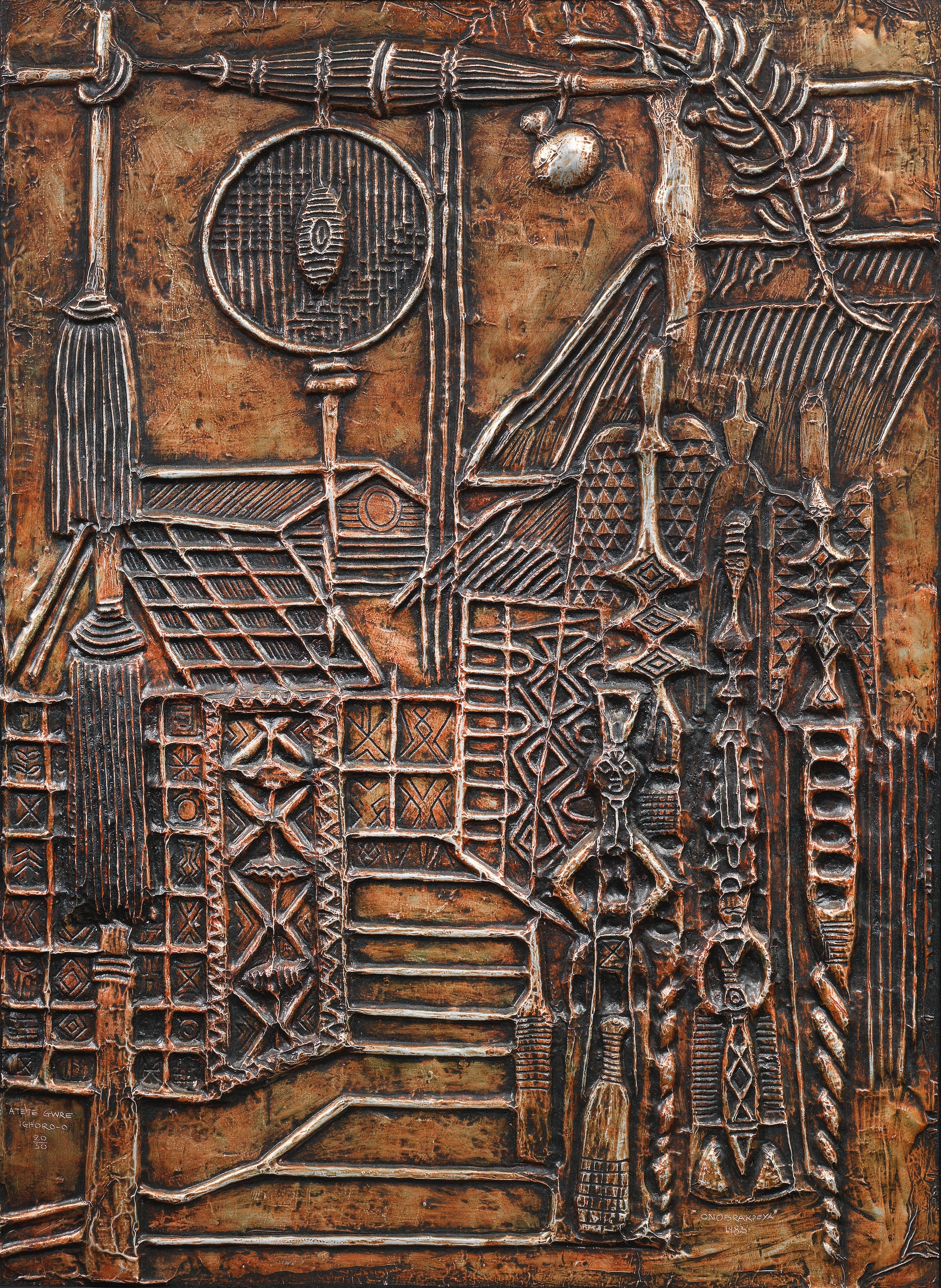
Atete Gwre Ighoro-o

A daily walk with Bruce Onobrakpeya: Day 6

This expression which  roughly translates to "May the Hawking tray always return with its owner at the end of the day" can be understood as a prayer or a wish for both success and safety. The "Hawking tray" in this context symbolizes the means or tools one uses to earn a living, akin to a hawker's tray full of goods for sale. The phrase "always return with its owner" underscores the dual hope that the individual not only achieves success (represented by the tray being full of the day's profits and gains) but also returns safely home at the end of the day. This proverb, therefore, encompasses a comprehensive blessing – that one's daily efforts lead to fruitful gains and that these are safely brought back home, ensuring both economic well-being and personal safety. On a reflective note the expression may also be an invocation and prayer to God, for the Gift of a life well spent, crowned with attributes like Wealth, Peace of mind, Prosperity and a Great legacy in life

Picture Credit: Onobrakpeya. In Atete Gwre Ighoro-o, Onobrakpeya depicts two poles supporting a third bar to form an entrance gate to a village.  Suspended from the cross-bar is the "Atete" (straw-tray) which contains prayers and blessings tied to its middle.


Wednesday, January 3, 2024

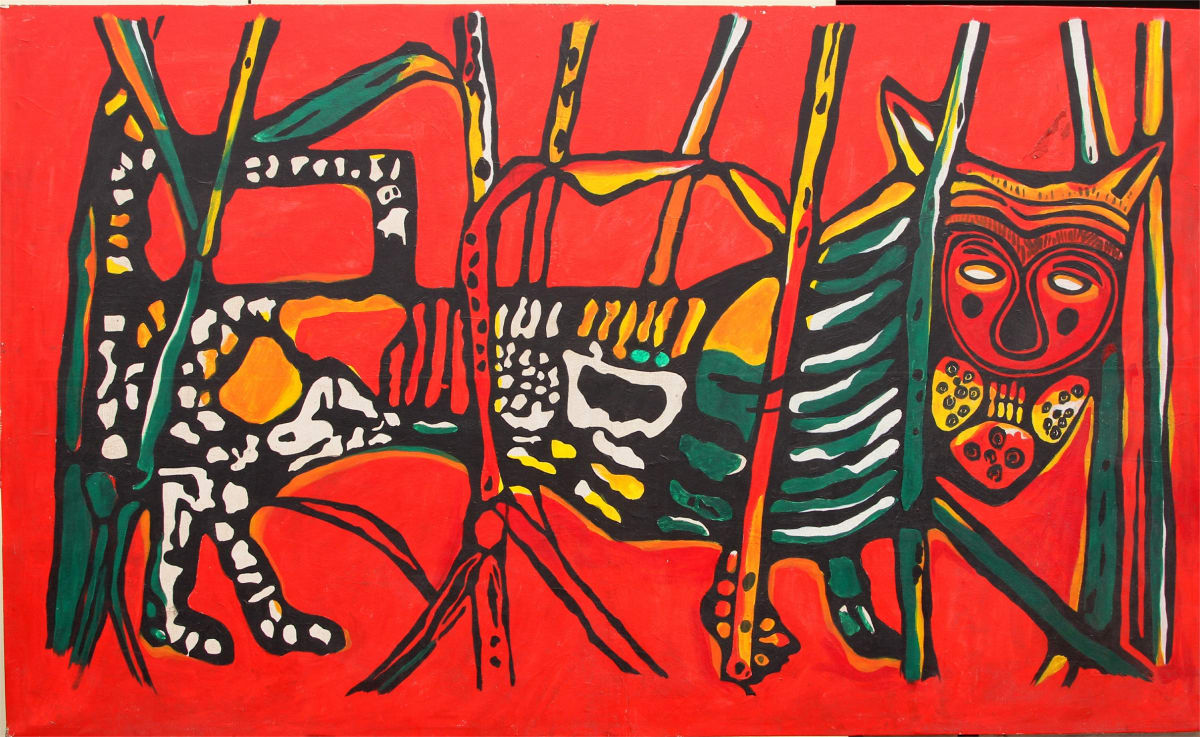
The Leopard In a random walk in the Cornfield

Nigerian Proverb in Pidgin English

One Man meat, na another Person Poison

 A daily walk with Bruce Onobrakpeya: Day 4 

Though the forest might seem daunting and mysterious to many, it's a sanctuary to the leopard. This metaphor underlines the profound truth that what may be challenging and unfamiliar to some can be a haven of comfort and familiarity to others. It highlights the rich tapestry of diverse experiences and viewpoints that different individuals or groups possess. Furthermore, it serves as a call for unity, inviting people from all walks of life to embrace and learn from each other's unique perspectives."


Picture Credit: Leopard In the Cornfield by Bruce Onobrakpeya, 1966
 

Tuesday, October 17, 2023

MUSON FESTIVAL EXHIBITION

 The highly anticipated Muson Festival is set to captivate art enthusiasts from October 22nd to 29th, offering a breathtaking showcase of artistic brilliance. This year's festival promises to be nothing short of extraordinary, featuring a remarkable collection of works by the celebrated Bruce Onobrakpeya, spanning various forms of media. 


Among the highlights of this artistic extravaganza are the enchanting lyrical prints by the avant-garde artist, Folahan Olumide. These pieces promise to challenge conventional artistic boundaries and inspire creativity.

Moreover, the festival embraces the theme of "Resilience" with a curated selection of traditional art pieces. These works will reflect the enduring spirit of artists throughout history, embodying their ability to overcome adversity and emerge stronger, more vibrant, and creatively invigorated.

In total, the Muson Festival will proudly display around 30 exquisite pieces, each a testament to the power of art to inspire, provoke thought, and transcend barriers. Don't miss this opportunity to immerse yourself in a world of artistic wonder and celebrate the enduring legacy of these remarkable artists. Join us from October 22nd to 29th for an unforgettable journey into the heart of creativity and resilience.

Wednesday, September 13, 2023

THE MASK AND THE CROSS

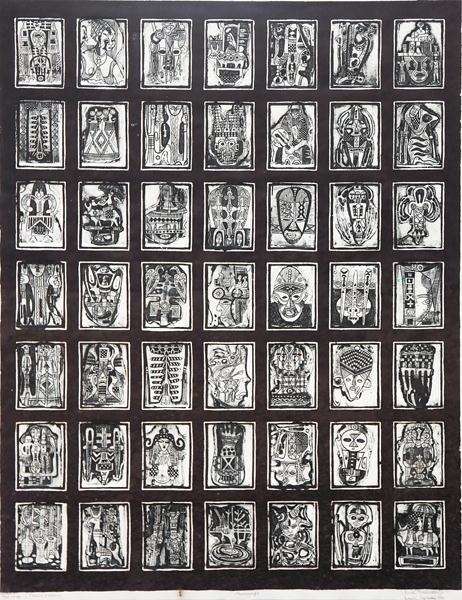
 "The Mask and the Cross" are artworks created by Bruce Onobrakpeya, set in the final days of colonial Nigeria and shortly after its independence. These works offer a unique African perspective, delving into the underlying teachings, principles, and lessons derived from the life of Christ and the Resurrection of Christ.


The artist refers to these pieces as "New Masks" because they represent his endeavor to reconstruct and re-imagine artworks using ideas from old masks, many of which were discarded and burnt by early Christian missionaries. 
The New Masks by Onobrakpeya retain the aesthetic potency of the original masks, now manifested in various media such as paintings, plastocasts, low relief sculptures, and other techniques that he has developed and  innovated throughout his nearly 65-year artistic career.

These artworks are infused with the same esoteric meanings, conveying a narrative that transcends geographical and chronological boundaries, making them accessible to people of any culture. 

"The Mask and the Cross" serve as narratives that reinterpret the universal essence of goodness by focusing on the core values that should foster a deeper understanding of the Christian message. In these artworks, Jesus Christ and other religious figures are depicted as universal symbols, emphasizing the essence of Christianity rather than being bound by the geographical and anatomical contexts of the Jewish and Roman people.
 
2nd June 2023


POSTSCRIPT
The Solo exhibition by Onobrakpeya  which was extremely well received at the prestigious High Museum in Atlanta, came  to a close, at the end of July. "The Mask and the Cross" is now billed to travel to The Smithsonian Institute, Washington D.C., in the second quarter of 2024 and the National Museum of Montreal, Canada and Vatican Museum shortly after.

3rd Sept 2023
Mudiare Onobrakpeya

Wednesday, December 18, 2019

Seasonal Greetings


Nativity (Mother and Child), Metal Etching, Bruce Onobrakpeya,1996


Seasonal Greetings

Bruce Onobrakpeya Foundation
41 Oloje Street, Papa Ajao,
Mushin, Lagos, Nigeria

Sunday, November 10, 2019

Tribute to Frank Chukwuma Okonta by Onobrakpeya

Chief Frank Chukwuma Okonta

I visited Chief Frank Chukwuma Okonta in his country home in Ibusa, Delta State a few years ago with Kunle Adeyemi, during one of the editions of the Harmattan workshop. I was immediately struck by the serenity of his home where he demonstrated his love for nature through his garden and palatial space, he also had quite a collection of art which he fondly displayed hanging on many walls of his home. Chief Okonta came across as an endearing gentleman with a lot of warmth in his heart. He spoke flawless Hausa, had gone to school in the north and now lived in Lagos.
Okonta was a seasoned administrator given his background as a past director in the Ministry of Information, Secretary General of the Nigerian Olympic Committee, chairman Nigerian Boxing Committee and President of Nigerian Cycling Association. He clearly was a gentleman that understood the inner workings of the Nigerian government, based on his varied and accumulated experience in government service.
Over time he also collected art wherever he travelled to, all over Nigeria and very widely abroad. This collection crystallized in his founding the Nkem gallery, where his collection could be viewed. He also became like Gbadamosi and Olagbaju, a great admirer of Nigerian art, and often could be seen encouraging budding and mature artists by attending and visiting exhibitions and shows very frequently. Okonta visited my show Onobrakpeya and the Harmattan Experiment, at Kadjinol station during  Dakar 2012 Biennale in Senegal.
But by far his greatest and most significant achievement will be helping to found and later becoming the pioneer President of the Art galleries Association on Nigeria (AGAN). AGAN was the umbrella organization for gallery owners all over the country. AGAN also has to its credit staging the historic art Expo which brought together in an Art fair setting many galleries in Nigeria and West Africa to Lagos.
His legacy will have to be helping to raise awareness of the generality of people about the greatness of Nigerian art, through first his acquisition of a personal collection of art, then owning and operating the Nkem gallery in Lagos, and later organizing the epoch making Art Expo, which was a historic and cultural landmark event, Art Expo brought several galleries together to celebrate Nigerian art and once again reestablish Lagos as a notable art epicenter in West Africa.
Frank Okonta loved great traditional and modern music, and in fact was also an avid fan of Fela, he also loved fine dinning and great gourmet, and civil community and society, but above all he was a connoisseur of Nigerian modern art, who had passion to showcase the magic of Nigerian art.
He will be greatly missed by the creative industry where he laboured greatly to show our, elegance and nobility as a people through the fine arts.
Bruce Onobrakpeya

Wednesday, January 31, 2018

Sterling Qualities of Prof. Stella Idiong by Bruce Onobrakpeya


Chairman’s Opening Speech
At the
Commissioning of the Art Exhibition in honour of Late Prof Stella Idiong
University of Uyo

It is an honour and privilege to be the Chairman at the commissioning of an art gallery and a commemorative exhibition in honour of late Prof. Stella Idiong here in the University of Uyo. I am particularly happy to  be part of the process of immortalizing Stella Idiong because she was one of our very own. As an alumnus of  the Harmattan Workshop, an informal educational forum, which I founded in Agbarha Otor,  Delta State, her participation and creative innovations in printmaking during several workshops she had attended, have been of great inspiration to us. Indeed this connection opened the way for my many visits to Uyo, and my claim as a son of Akwa Ibom.
Stella Idiong was a great teacher with vision, she commissioned an etching Press to be built in Lagos for Printmaking here in Uniuyo Art Department. She knew the important role that art galleries play in the education of the artists, and actually established the first gallery of Art in the University art department, where she encouraged art exhibitions.

With the commemorative Exhibition “Artforms” the function of an art gallery in a University has started to be made manifest. We can see and appreciate beautiful artworks which are not inhibited  by pressures of commercial art that Prof. Idiong, art works and those of faculty members and students  are now been showcased.
Prof.  Idiong’s art particularly the prints are timeless. Equally great  are pieces  by A. John Sampson, Dr. Anselem Nyah, Dr. Okonofua who I already know from their participation in the Harmattan workshops. Works of other members of the faculty  include Efiong Asukwo, Eyefiokio, Dr. Emoidem Udoh, Udom Bassey, Utom Obong – Ajuzie, J. Akim, Itoro Ekong and Ibrahim Bai are also  great.
The students works show great promise. I urge them to take art as a journey of discovery, adopt mentors and patrons and by so doing not even the sky will be their limit.
Unuiyo should be proud to be one of the very few Universities in Nigeria, to establish their own art gallery. I hope in the future, this gallery which is being commissioned today will be a full fledged department with its own director.
University art galleries own collections which along with changing exhibitions attract visitors from outside  the university community, thereby promoting the idea of  ” the town meeting the gown” To this effect I hereby donate my artwork titled Thanksgiving to the Stella Idiong  Art Gallery. This is in thanks to God for her life and her contributions to humanity.
Finally we are grateful to the family of late Prince Sampson Idiong and Late Princess (Professor) Stella O. Bernard Idiong for the magnanimous gift.
We pray that the legacy of Stella idiong, art teacher, Lecturer, Educationist and a distinguished fine artist, may last forever.

Bruce Onobrakpeya NNOM
29th January 2018